Overview
This guide explains how GxP, GMP and GDP differ and where each applies. You will also see how to map these frameworks to Microsoft Dynamics 365 Business Central features for day-to-day control.
What GxP Actually Means
GxP acts as an umbrella term for quality guidelines in regulated industries. The “G” stands for good practice, while “x” refers to a specific area, like manufacturing, distribution, or lab work.
You will not comply with GxP as a single regulation. Instead, you follow specific frameworks under it, such as GMP or GDP. This matters because each framework targets a different stage of your operations.
For example, a pharmaceutical manufacturer follows GMP during production. However, the same company follows GDP when it distributes finished products. So, your obligations change as products move through your supply chain.
Because GxP covers multiple areas, you need systems that track activity across departments. This ensures you maintain consistent records, which regulators expect during inspections.
What Is GMP and Who Does It Apply To?
GMP stands for Good Manufacturing Practice. It sets strict requirements for how you produce goods to ensure safety, quality, and consistency.
You must follow GMP if you manufacture regulated products. These include:
- Pharmaceuticals
- Medical devices
- Food and beverages
- Cosmetics
GMP focuses on process control. For example, you must:
- Track raw materials and batches
- Maintain controlled production environments
- Record every step in production
- Train staff and document procedures
Because production errors can affect product safety, GMP places strong emphasis on prevention. You must design processes that reduce risk before issues occur.
If you fail to meet GMP standards, regulators can halt production or issue fines. In serious cases, they can revoke licences. So, you need clear procedures and accurate records at every stage.
What Is GDP and Who Does It Apply To?
GDP stands for Good Distribution Practice. It governs how you store, transport, and deliver regulated products after production.
You must follow GDP if you operate in the supply chain beyond manufacturing. This includes:
- Wholesalers
- Distributors
- Logistics providers
- Pharmacies
GDP focuses on maintaining product integrity. For example, you must:
- Control storage conditions such as temperature
- Track product movement across locations
- Verify suppliers and customers
- Maintain full traceability
Because products can degrade or become unsafe during transit, GDP requires continuous monitoring. You must prove that conditions remained within acceptable limits.
If you fail to meet GDP standards, you risk product recalls or compliance action. Therefore, you need full visibility across your logistics operations.
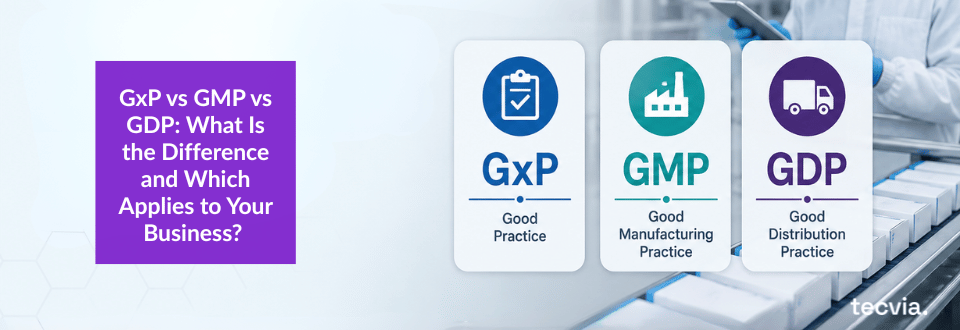
GxP vs GMP vs GDP: What Is the Difference?
Understanding the difference helps you apply the right controls. Many businesses confuse these terms, but each serves a distinct purpose.
Framework | Type | Scope | Focus |
GxP | Umbrella term | All regulated good practice areas | High-level classification |
GMP | Specific framework | Manufacturing processes | Product quality and production control |
GDP | Specific framework | Distribution and logistics | Storage, transport and traceability |
So, GxP describes the category. GMP and GDP define the actual rules you follow in daily operations.
Because each framework applies to a different stage, you must map them to your business processes carefully.
Which Framework Applies to Your Business?
Your obligations depend on your role in the supply chain. In many cases, more than one framework will apply.
Use this simple guide:
- If you manufacture products, GMP applies
- If you store or transport products, GDP applies
- If you do both, GMP and GDP apply
For example, a pharmaceutical company that produces and distributes medicines must meet both standards. That overlap creates additional complexity, because you must manage production and logistics controls together.
If you work in life sciences, pharmaceuticals or food and beverage, our industry pages cover the specific regulatory pressures in more detail.
Smaller businesses often assume these rules only apply to large organisations. However, regulators apply the same standards regardless of company size. So, you must build compliant processes from the start.
Because of this, many companies adopt an ERP system to manage compliance. A single system reduces data gaps and improves traceability across departments.
How Business Central Supports GxP Compliance
Microsoft Dynamics 365 Business Central helps you manage GMP and GDP requirements in one system. It supports traceability, control and documentation across your operations.
Lot and Batch Tracking
Assign lot numbers to products and track them from raw materials through to delivery. Both GMP and GDP require full traceability at item level, and Business Central gives you that without manual effort.
Audit Trail
Business Central logs every data change automatically, recording the user and timestamp. During an inspection, you can produce a complete activity record quickly and without digging through spreadsheets.
Approval Workflows
Set approval steps for key actions such as purchase orders or production changes. Nothing critical moves forward without sign-off, so control stays with the right people at every stage.
Approved Vendor Lists
Restrict purchasing to verified suppliers and block orders outside your approved list. This keeps your supply chain within compliance boundaries and reduces the risk of quality failures at source.
Document Control
Store procedures, policies and quality documents centrally in one system. Your team always works from the current approved version, which removes the risk of outdated instructions reaching the production floor.
Because these features work together, you gain better visibility across your operations. As a result, you can respond quickly to issues and maintain compliance.
For more detail, explore:
https://tecvia.co.uk/microsoft-dynamics-365-business-central-features-tecvia/
https://tecvia.co.uk/microsoft-dynamics-365-business-central-implementation/
What This Means for Your Business
If you operate in a regulated industry, you must identify where GMP and GDP apply. Then you need to align your systems and processes with those requirements.
A connected ERP system helps you manage this effectively. It links production, inventory, and distribution data in one place. This improves accuracy and reduces manual work.
When you maintain clear records and controlled processes, you reduce compliance risk. You also improve operational efficiency, which supports long-term growth.
Get Support With GxP Compliance
Tecvia implements Business Central for manufacturers, distributors and life sciences businesses across the UK. If your current systems make compliance harder than it should be, we can help you close the gaps.
Get in touch:
https://tecvia.co.uk/contact-us-tecvia/
Explore Business Central:
https://tecvia.co.uk/microsoft-dynamics-365-business-central-features-tecvia/
https://tecvia.co.uk/microsoft-dynamics-365-business-central-implementation/
You can also read:
https://tecvia.co.uk/blog/what-is-erp/
https://tecvia.co.uk/blog/business-central-vs-other-erp-systems/