Can you trace every product, component, or financial transaction in your business right now? If not, that is a risk you probably cannot afford.
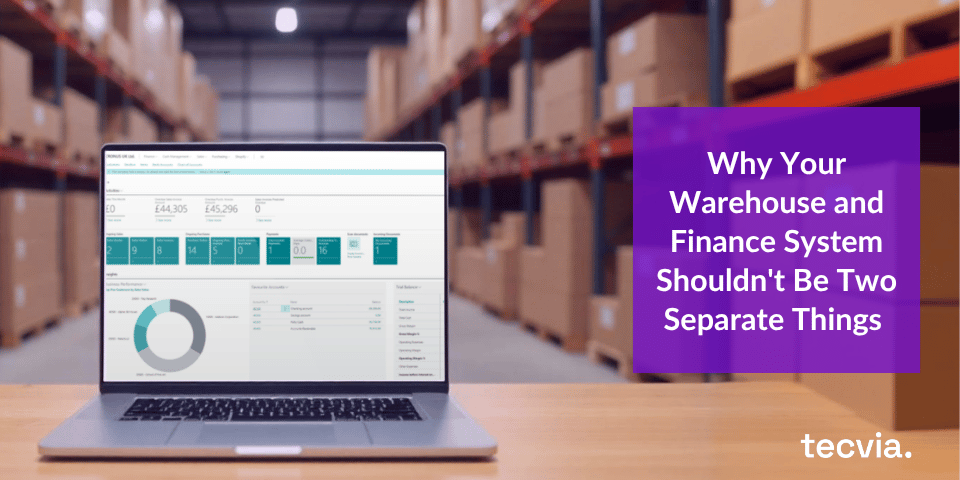
Microsoft Dynamics 365 Business Central is a cloud-based ERP system built to give businesses end-to-end visibility. From raw materials arriving at your warehouse to a finished product reaching a customer, Business Central records every step.
At Tecvia, we implement Business Central for businesses across the UK. Traceability is one of the most common requirements we see, whether that is driven by compliance, customer demands, or the need to act quickly when something goes wrong.
What Is Traceability and Why Does It Matter?
Traceability is the ability to track the history, location, and use of a product or material at any point in its lifecycle. It matters because:
- Product recalls can be contained to specific batches rather than entire product ranges.
- Regulators in industries such as food, pharmaceuticals, and manufacturing require documented audit trails.
- Customers expect proof that products meet quality and ethical sourcing standards.
- Supply chain disruptions are easier to isolate and fix when you have clear records.
- Financial audits go faster when every transaction links back to source documents.
Inventory and Product Traceability in Business Central
Business Central lets you assign serial numbers or lot numbers to every item you stock. This means you can see exactly where each unit came from, where it went, and when.
Practical examples of what this looks like day to day:
- A food manufacturer can pull up every batch of an ingredient used on a specific production run within seconds.
- A distributor can see which customer received items from a specific supplier lot, essential for targeted recalls.
- A retailer can track shelf life and expiry dates across thousands of SKUs without relying on spreadsheets.
Business Central also supports barcode scanning and RFID integration. Warehouse staff can scan items in and out, and the system updates stock records in real time. No manual data entry, no errors from transcription.
Supplier and Vendor Traceability
Knowing where your materials come from is just as important as knowing where your products go. Business Central stores full supplier records including contact details, purchase history, agreed terms, and performance data.
Every purchase order links directly to a supplier. When a batch of raw materials arrives, it is tagged to that purchase order and that supplier. If a quality issue appears downstream, you can trace it back to the source in a few clicks.
Add-on apps available through Microsoft AppSource extend this further:
- Vendor rating tools score suppliers on delivery performance, quality, and compliance.
- Certificate management apps track supplier accreditations and alert you before they expire.
- Automated approval workflows flag purchases from underperforming vendors for review before orders are placed.
Production and Manufacturing Traceability
For manufacturers, traceability must cover the entire production process, not just inputs and outputs. Business Central’s production orders record every stage of a manufacturing run.
Each production order captures:
- Which components or ingredients were used and in what quantities.
- Which work centres or machines were involved.
- How long each operation took.
- Which operators completed each step, using add-on apps for shop floor data capture.
- Any quality checks carried out during production.
This level of detail is particularly important in regulated industries. If a batch fails inspection, you can trace back through every input, every machine, and every operator involved.
Quality Control and Compliance
Quality control is only useful when it is documented and auditable. Business Central, combined with quality management add-ons, gives you a structured way to record inspections and enforce compliance.
- Set up inspection checkpoints at goods receipt, during production, and before despatch.
- Record pass or fail results against specific lot numbers or serial numbers.
- Block the release of stock that has not passed inspection.
- Store certificates of conformity and test results against items or purchase orders.
- Use Power BI dashboards to spot patterns in quality failures across suppliers or product lines.
When an auditor asks for proof of compliance, you pull a report rather than digging through folders. That is a significant time saving for businesses operating under ISO standards, food safety regulations, or pharmaceutical compliance requirements.
Sales and Customer Order Traceability
Business Central records every customer order from the moment it is placed to the moment it is delivered and invoiced. Each order links to the specific stock items despatched, including their lot or serial numbers.
This means if a customer reports a problem with a product, you can:
- Identify which batch or serial number they received.
- Check if other customers received items from the same batch.
- Trace that batch back through production to identify the root cause.
- Issue a targeted recall to only the affected customers.
Customer profiles in Business Central also store order history and communication records. Combined with customer feedback add-ons, this data helps you spot repeat issues before they become a pattern.
Financial Traceability and Audit Trails
Financial traceability is often overlooked in ERP conversations, but it is just as important as stock or production traceability. Business Central keeps a full audit trail of every financial transaction.
- Every invoice, payment, and journal entry links to the source document that created it.
- User permissions control who can post, approve, or reverse transactions.
- Audit trail reports show who made changes, when, and what the original values were.
- Dimension codes allow you to track spend and revenue by department, project, or cost centre.
For finance teams, this means year-end audits and management accounts become straightforward. There is no need to reconcile separate systems or chase down who approved what.
AI and Traceability in Business Central
Microsoft has built AI capabilities directly into Business Central through Copilot. For traceability specifically, this changes how quickly your team can access and act on information.
Here is what Copilot currently does inside Business Central:
- Natural language queries. Instead of navigating menus, a warehouse manager can type a question like ‘show me all items from lot 5042 and where they were shipped’ and get an instant answer.
- Anomaly detection. AI flags unusual patterns in stock movements or financial entries that might indicate errors or compliance risks before they escalate.
- Predictive stock suggestions. Copilot can recommend reorder points and quantities based on historical demand, supplier lead times, and seasonal patterns.
- Document summarisation. Purchase orders, supplier certificates, and inspection records can be summarised automatically, reducing the time your team spends reading through paperwork.
- Automated data matching. AI can match goods receipt notes to purchase orders and invoices, reducing three-way match errors in accounts payable.
AI does not replace the need for good processes. What it does is surface the right information faster, so your team spends less time searching and more time acting. For traceability, speed matters, especially when a recall or audit is time-sensitive.
Reporting and Analytics with Power BI
Business Central connects directly to Microsoft Power BI. This lets you build dashboards that pull live data from across your ERP and present it in a format that makes sense to decision-makers.
Typical traceability reports built by Tecvia clients include:
- Lot traceability reports showing the full journey of a batch from supplier to customer.
- Quality control dashboards tracking inspection pass rates by product, line, or supplier.
- Supplier performance scorecards comparing on-time delivery and defect rates.
- Expiry date monitoring reports flagging stock approaching its use-by date.
- Financial audit dashboards showing transaction history by user and time period.
These reports update in real time. You are always looking at current data, not last night’s export.
How Tecvia Approaches Business Central Traceability Projects
Traceability looks different in every business. A food manufacturer’s requirements are not the same as a medical device distributor’s. At Tecvia, we spend time understanding your specific compliance obligations, your existing processes, and the gaps that put you at risk before recommending a solution.
We configure Business Central around your workflows, not the other way around. We also identify where third-party apps from AppSource can fill gaps the core system does not cover out of the box. Examples include advanced quality management, electronic batch records, and document management.
If you are currently managing traceability through spreadsheets, paper records, or a system that was not designed for it, the risk of a gap grows every day. Business Central gives you one system of record, accessible to the right people, with a full audit trail behind every entry.
Get in touch with the team at Tecvia to find out how Business Central can work for your business.

 What is traceability in business operations?