

Business Central for UK Finance Directors and Managers

Close Faster and See Your Cash Position in Real Time

Business Central gives finance directors and managers one live view of cash, costs and performance. You close each month in one system instead of reconciling spreadsheets. Tecvia, a Manchester-based Microsoft Solutions Partner for AI Business Solutions, implements it for UK SMEs and supports it afterwards.

Microsoft Solutions Partner for AI Business Solutions — Tecvia
Tecvia Business Central ERP for finance teams

How Business Central Cuts Month-End Effort

Business Central shortens month-end because most of the work happens during the month, not after it. Sales and purchase documents post to the general ledger as your team processes them. So when the period ends, you review and lock it rather than rebuild it from spreadsheets.

Five Ways Business Central Speeds Up Your Close

  1. Automatic bank matching: Business Central matches bank statement lines to ledger entries, so your team only reviews the exceptions. Copilot can also suggest matches for harder items.
  2. Recurring and deferral journals: Set up accruals, prepayments and allocations once, then post them each period in a few clicks.
  3. Posting from source documents: Sales invoices, purchase invoices and stock movements update the general ledger as they happen.
  4. Period locks: Allowed posting dates stop anyone posting into a closed month, which protects your reported figures.
  5. Live financial reports: Financial reporting and the Excel add-in refresh from live data, so you don’t rebuild reports every month.

See every finance capability on our Business Central features page, or explore Power BI for Business Central for board-level dashboards.

Key Benefits of Business Central for Finance Directors

Cash Flow Forecasting

Business Central builds cash flow forecasts from open sales orders, purchase orders and receivables. You see expected cash in and out for the weeks ahead. So you can plan payments and spot shortfalls before they hit the bank.

Budgets and Variance Reporting

You load budgets by account, department or project, then compare them against actuals at any point in the month. Financial reports show variances as soon as transactions post. That means you can act on overspend before the period closes.

Financial Controls and Audit Trail

Approval workflows route purchases, payments and journals to the right person before they post. Every posted entry keeps a full audit trail with the user, date and source document. When auditors arrive, you can set them up as External Accountant users, which Microsoft includes at no extra licence cost.

Multi-Company and Consolidation

Business Central runs multiple companies in one environment, with intercompany postings between them. You consolidate group results without copying data into spreadsheets. As you add entities, you add companies rather than new systems.

Always-Current Cloud Platform

Microsoft updates Business Central twice a year, so you avoid costly upgrade projects. The system runs in Microsoft's UK data centres, with backups and security handled for you. Your team logs in from the office, from home or on a phone.


How Finance Teams Use Business Central Daily

Morning Financial Review

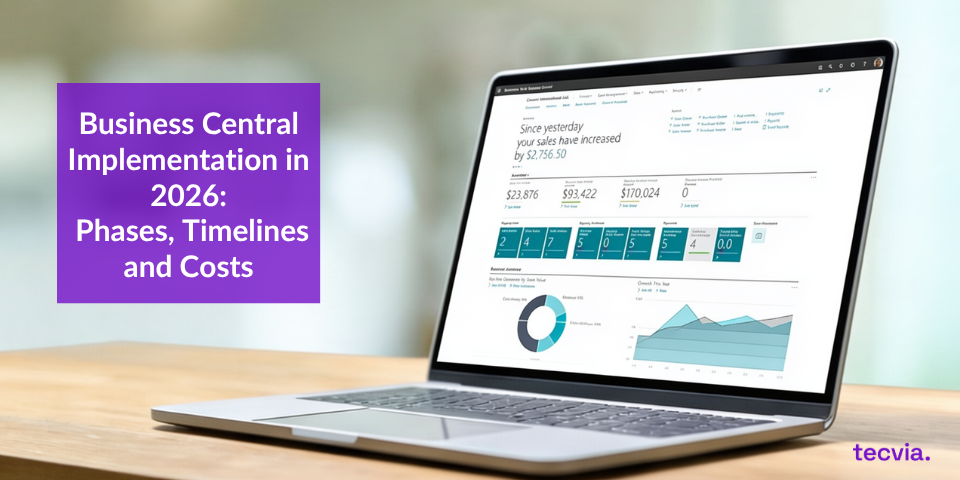
Your Business Manager role centre opens with yesterday's sales, overdue receivables and today's cash position. You click any figure to see the transactions behind it. So you know what needs attention before your first meeting.

Board and Stakeholder Meetings

You open live financial reports in the meeting rather than printing last month's pack. When someone asks a question, you drill into the detail on screen. That way, you make decisions in the room instead of chasing follow-ups.

Supplier Payments and Collections

Business Central suggests which supplier invoices to pay, based on due dates and early payment discounts. You approve the payment run and send it to your bank through your chosen integration. Meanwhile, Business Central sends reminders to customers with overdue invoices.

VAT and Year-End

You submit VAT returns to HMRC under Making Tax Digital directly from Business Central. At year-end, your accountants pull trial balances and supporting entries themselves. Your advisers then prepare corporation tax and statutory accounts from clean, complete data.

What Makes Business Central Different From Sage and Xero

Most growing UK businesses move to Business Central from Sage, Xero or QuickBooks. Those tools handle accounting well. However, stock, sales and production usually sit in separate apps connected by integrations.

Business Central runs finance and operations in one database. So every invoice, stock movement and production order posts straight to the general ledger.

Multi-Currency Trading

You invoice customers and pay suppliers in any currency. Business Central posts the sterling value and can update exchange rates from an online service. At period-end, the revaluation routine adjusts open balances for currency movements.

Dimensions for Flexible Analysis

Dimensions tag every transaction by department, project, location or any category you define. You then slice the profit and loss by any combination without adding accounts. That keeps your chart of accounts short and your reporting flexible.

Intercompany and Group Reporting

Intercompany sales and purchases between your companies create matching entries on both sides. Consolidation then pulls each company’s results into one group view. So your team reviews eliminations instead of rebuilding group accounts in Excel.

Dynamics 365 Business Central core modules Finance, sales, purchasing, warehouse, production and service running in one system. Microsoft Dynamics 365 Business Central Finance Sales Purchasing Production Warehouse Service

Common Challenges Business Central Solves for Finance Directors

Your Stock Value Never Matches the Ledger

Stock sits in one system and the accounts sit in another. Every month, someone reconciles the two by hand.

Solution

Business Central posts every stock movement to the general ledger at cost. Inventory valuation reports tie back to the balance sheet. So the reconciliation becomes a quick check rather than a project.

Your Team Keys the Same Data Twice

Your team re-keys orders, invoices and payments between systems. Each re-key adds another chance of error.

Solution

Your team enters each transaction once. It then flows from order to invoice to ledger without re-keying.

Reporting Depends on One Person

One analyst owns the spreadsheets that produce your management accounts. When they’re off, reporting stops.

Solution

Financial reports sit inside Business Central, built on live data. Anyone with the right permissions can run them. Your reporting logic no longer lives in one person’s workbook.

Approvals Happen by Email

Managers approve purchase requests and supplier bank changes in email threads. Afterwards, you can’t prove who signed off what.

Solution

Approval workflows send each request to the right approver inside Business Central. The system records every decision, which helps protect you against supplier bank detail fraud.

Board Packs Take Days to Build

Your team exports data, pastes it into Excel and formats the board pack by hand. By the time it’s ready, the numbers are out of date.

Solution

The Excel add-in and financial reporting pull live figures straight from Business Central. You refresh the pack instead of rebuilding it each month.

What Business Central Costs and What It Returns

Your total cost has three parts: Microsoft licences, implementation and ongoing support. Licences are a monthly fee per named user. Implementation is a one-off project, priced on the scope of your processes.

You’ll find current figures on our Business Central pricing page.

Measurable Return

Most of the return comes from hours your finance team stops spending on manual work. As an illustration, three staff each saving four hours a week at £25 an hour frees £15,600 a year. We build this calculation with your own figures during the assessment.

Lower Finance Workload

Automated postings, bank matching and live reports remove routine tasks from your team's week. That capacity goes into analysis, forecasting and business partnering. So you can support growth without adding finance headcount at the same rate.

Licences That Fit Your Team

Essentials covers finance, sales, purchasing and inventory. Premium adds manufacturing and service management. Staff who only approve or view records can use the lower-cost Team Members licence.

Why Finance Teams Choose Tecvia for
Business Central ERP

Tecvia is a Microsoft Partner based in Manchester. We implement Dynamics 365 Business Central for businesses across the UK, working closely with finance teams to make sure the system fits the way they actually work.

We don’t deliver a generic setup and move on. We take time to understand your financial processes, your reporting requirements, and the pressures you’re managing day to day. That means you get a system built around your business, not the other way around.

Our team stays involved from initial scoping through to go-live and beyond. We also provide training and ongoing support, so your finance team feels confident using Business Central from day one.

What Working with Us Looks Like

Financial System Assessment

We review your current financial processes. Identify pain points. Recommend improvements. Show what’s possible. 

ROI Analysis

Calculate your specific return. Time savings. Error reduction. Better decision impact. Quantify benefits. 

Implementation Approach

Phased deployment minimises risk. Start with core financials. Add capabilities progressively. Maintain business continuity. 

Don't Just Take Our Word For It

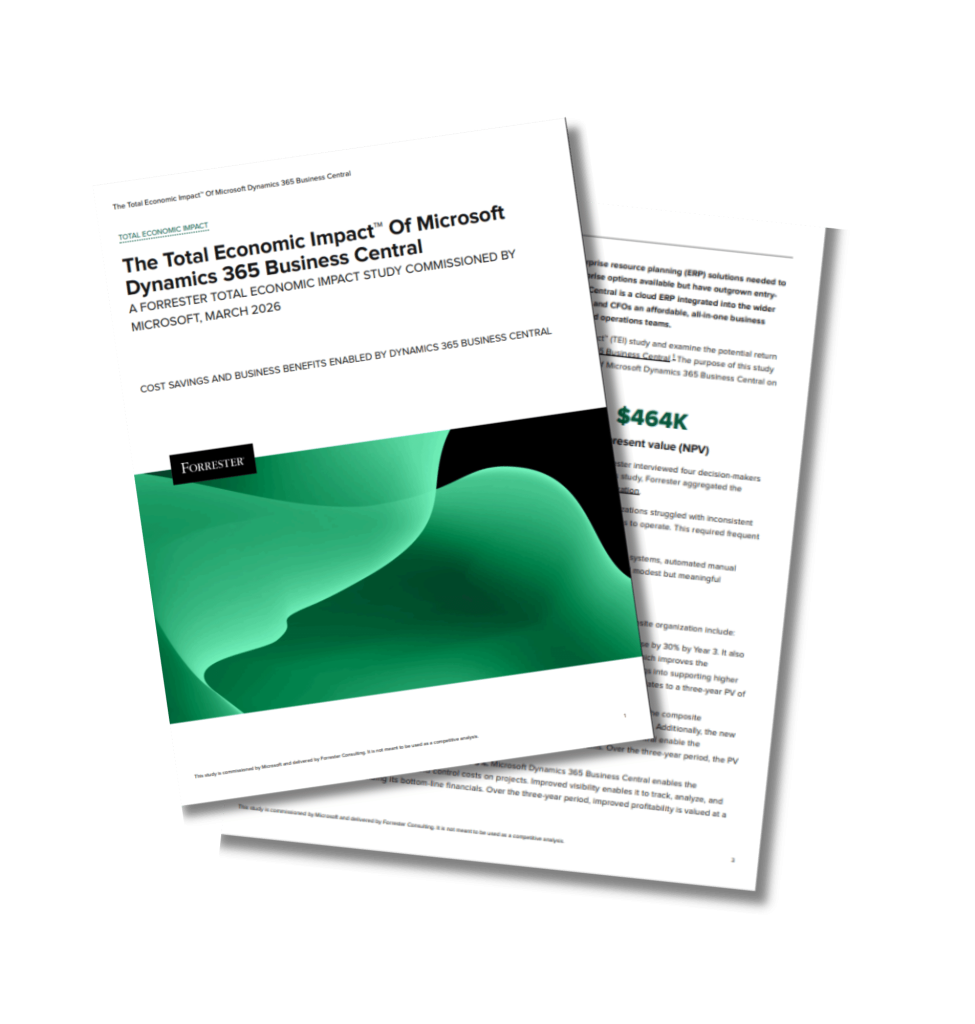
Forrester Study: Business Central Delivers 200% ROI in Three Years

See the numbers behind the business case for Business Central. More than 200% return on investment over three years, with payback in as little as six months.

Finance Directors in Business Central: FAQs

To help you navigate our page more effectively, we’ve complied answers to some of the most frequently asked questions. If you have any additional questions or need further clarification, please don’t hesitate to contact us! 

Business Central manages multiple currencies comprehensively. Set exchange rates daily. Transactions post in original and base currency. Unrealised gains and losses calculate automatically. Revaluation processes built-in. Consolidated reporting in your chosen currency. Currency management is sophisticated. 

Yes. Business Central produces compliant statutory accounts. Chart of accounts maps to UK requirements. Balance sheet and profit and loss statements. Notes to accounts. Directors’ report. Audit trail documentation. Most firms accept output directly. 

Full Making Tax Digital support exists. VAT returns submit directly to HMRC. Digital links maintain throughout. Audit trail meets requirements. Fraud prevention headers included. Regular updates ensure compliance. MTD obligations are straightforward. 

Extensive standard reports include trial balance, aged receivables, aged payables, income statement, balance sheet, cash flow statement, budget comparison, dimension analysis, and VAT returns. Account schedules enable custom report building. Most reporting needs are covered. 

Yes. Historical data imports during implementation. Opening balances. Transaction history. Customer and supplier details. Chart of accounts. Supporting documentation. We plan data migration carefully. Historical reporting continues. 

Comprehensive fixed asset management included. Asset register maintenance. Multiple depreciation methods. Disposal tracking. Insurance values. Maintenance schedules. Fixed asset reporting. Depreciation posts automatically to general ledger. 

Yes. Business Central is multi-user. Multiple people enter transactions simultaneously. No locking conflicts. Real-time updates for everyone. Collaboration is seamless. 

Sophisticated intercompany functionality exists. Post transactions between legal entities automatically. Eliminations calculate for consolidation. Intercompany balances reconcile. Group reporting consolidates entities. Multi-entity groups manage easily. 

Complete audit trail for all transactions. User identification. Timestamp. Before and after values. Change history. Deletion prevention. Auditors access detailed history. Audit trails exceed most requirements. 

Yes. Banking integration is standard. Import bank statements automatically. Payment file generation. Reconciliation automation. Multiple bank account support. Most UK banks have standard feeds. Banking integration saves significant time. 

Still have questions specific to your business or your ERP requirements? Get in touch and we will give you a straight answer.