Business Central for Operations

Real-time inventory. Smarter production planning. Fewer delays.

Streamline Operations and Eliminate Production Bottlenecks

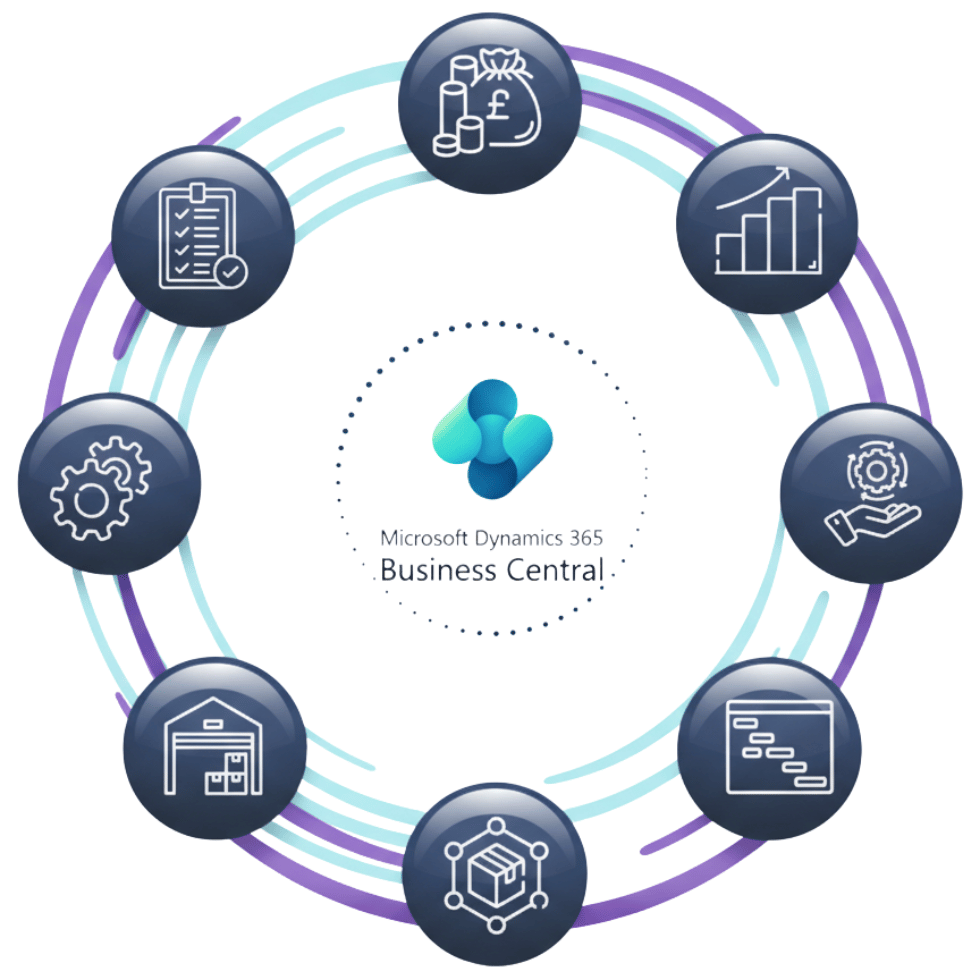
Are you fighting inventory shortages while sitting on excess stock in another location? Do production delays frustrate customers and put pressure on your team? Business Central gives operations managers a live view of inventory, production, purchasing, and fulfilment in one system.

Why Operations Directors and Managers Choose Business Central

Your role sits at the centre of the business. When something goes wrong in production, purchasing, or fulfilment, it lands on your desk. Business Central connects every part of your operation in one system, so problems surface earlier and your team spends less time firefighting.

What Business Central Does for Operations Directors and Managers: 

  • See inventory levels, production schedules, and supplier status in real time, without chasing updates across teams.
  • Automate routine tasks so your team focuses on exceptions and continuous improvement rather than data entry.
  • Give customers accurate delivery dates based on live availability and production capacity, not best guesses.

Key Benefits for Operations Teams

Advanced Inventory Management

Business Central tracks inventory accurately in real time across multiple locations, with full support for bin tracking, serial numbers, lot numbers, and complete traceability. Automatic reorder points, safety stock calculations, and demand forecasting help you prevent stockouts without over-ordering. Slow-moving stock is visible at a glance and turnover analysis helps you make better stocking decisions. When you operate across multiple sites, transfer orders balance inventory between locations and centralised purchasing keeps costs under control.

Production Planning and Scheduling

Business Central supports capacity planning, resource scheduling, and material requirements planning so you can prevent bottlenecks before they affect output. Multi-level bills of materials with version control and routing management give your team the structure they need to plan production accurately. Work orders are tracked in real time with shop floor visibility, progress monitoring, and actual versus planned analysis built in. Production costing captures actual costs against standard, records scrap, and tracks efficiency metrics so you can identify where profitability by product is being affected.

Supply Chain Visibility

Monitor supplier performance across delivery times, quality metrics, and pricing with supplier scorecards that inform better purchasing decisions. Purchase order management covers the full cycle from requisition through to approval, delivery tracking, goods receipt, and three-way matching. Sales forecasting, seasonal planning, and promotion planning feed into demand management so you can balance supply and demand before shortages or surpluses develop. That protects customer satisfaction and reduces the cost of reactive purchasing.

Quality Control

Quality processes run inside Business Central alongside purchasing, inventory, and production rather than in a separate system. Inspection plans, quality orders, non-conformance tracking, and corrective actions are all managed in one place, which means quality stays visible without adding paperwork. Forward and backward traceability, batch tracking, and serial number tracking support recall management and compliance assurance. Quality metrics including defect rates, first-time quality, and supplier quality give you the data to drive continuous improvement.

Enhanced Customer Service

Available to Promise (ATP) functionality uses real-time inventory and production scheduling to give customers accurate delivery dates rather than estimates. Your sales team can make realistic commitments without calling the warehouse, which builds customer confidence and reduces order amendments. Order status visibility, shipping updates, and proof of delivery provide complete transparency throughout fulfilment. Returns handling covers authorisation, quality assessment, and credit processing in one workflow, so customer issues are resolved quickly and consistently.
How Operations Teams Use Business Central Daily

Morning Operations Review

Start with production status, completion rates, quality issues, and resource utilisation to plan the day. Review the inventory position including incoming goods, outgoing shipments, and reorder requirements to prevent shortages before they develop. Supplier delivery status and any late orders flag automatically so you can act early.

Production
Management

Release work orders with material availability confirmed and resources scheduled. Real-time updates show completion status and surface issues as they arise so you can resolve them before they hold up the line. When exceptions occur, whether material shortages, equipment breakdowns, or quality failures, Business Central gives you the information to adapt quickly.

Inventory
Control

Review reorder points, generate purchase requisitions, and approve orders to maintain stock availability without over-ordering. Cycle counting keeps inventory accurate through regular checks and variance investigation. Stock transfers balance inventory across locations in response to demand patterns and keep fulfilment running smoothly.

Performance
Monitoring

Track operational KPIs including on-time delivery, order fulfilment rate, inventory turnover, production efficiency, and quality metrics. Bottleneck analysis and process efficiency data show where improvement opportunities exist so continuous improvement work targets the right areas.

What Makes Business Central Different


Industry-Specific Functionality 

Food & Beverage capabilities. Batch tracking. Shelf life management. Recipe management. Allergen tracking. Regulatory compliance. 

Manufacturing functionality. Production planning. Capacity management. Shop floor control. Engineering change management. Make-to-order or make-to-stock. 

Flexible Production Methods 

Make-to-stock production. Build for inventory. Efficient batch production. Reduced setup times. 

Make-to-order production. Customer-specific products. Custom configurations. Direct fulfilment. 

Assembly management. Kit assembly. Sub-assembly handling. Component tracking. Flexible manufacturing. 

Reporting and Analytics 

Operational dashboards. Real-time KPIs. Performance metrics. Exception alerts. Complete visibility. 

Power BI integration. Advanced analytics. Trend analysis. Predictive insights. Data-driven decisions. 

Mobile Access 

Warehouse management on mobile devices. Goods receipt. Put-away. Pick. Pack. Ship. Count. Barcode scanning. 

Shop floor data collection. Production reporting. Time tracking. Material consumption. Mobile efficiency. 

Common Challenges Business Central Solves for
Operational Directors  and Managers

Challenge: Inventory Accuracy

Manual counting is inaccurate. Systems aren’t updated. Discrepancies are common. Stockouts happen despite apparent availability.us accuracy monitoring.  

Solution

Business Central maintains accuracy. Real-time updates. Barcode scanning. Cycle counting. Variance investigation. Continuous accuracy monitoring.  

Challenge: Production Delays

Manual counting is inaccurate. Systems aren’t updated. Discrepancies are common. Stockouts happen despite apparent availability.us accuracy monitoring.  

Solution

Business Central prevents delays. Material planning. Capacity analysis. Constraint identification. Proactive management. On-time delivery improves. 

Challenge: Quality Issues

Defects reach customers. Traceability is poor. Root cause analysis is difficult. Corrective actions are slow.

Solution

Business Central improves quality. Quality checkpoints. Inspection recording. Non-conformance tracking. Traceability. Systematic improvement.

Challenge: Supply Chain Disruption

Supplier delays surprise you. Alternative sources unknown. Impact assessment is difficult. Customer communication is reactive.

Solution

Business Central provides visibility. Supplier monitoring. Alternative suppliers identified. Impact analysis. Proactive communication. Risk mitigation. 

Challenge: Poor Resource Utilisation 

Resources sit idle. Bottlenecks from elsewhere. Efficiency is low. Costs are high.

Solution

Business Central optimises resources. Capacity planning. Load balancing. Bottleneck identification. Utilisation metrics. Efficiency

Implementation Considerations

Data
Requirements

Clean master data essential. Items. BOMs. Routings. Suppliers. Customers. Data quality determines success.

Process
Standardisation

Consistent processes needed. Standardise before automation. Document procedures. Train teams. Change management critical.

Phased
Rollout

Start with core functionality. Add capabilities progressively. Learn and adapt. Reduce risk. Build confidence.

Integration with Operations Systems

Warehouse Management Systems

Business Central connects to WMS platforms where advanced warehousing is needed. Directed put-away, wave picking, and task management extend the core system's capabilities for complex warehouse operations.

Shop Floor Systems

Integrate with Manufacturing Execution Systems for real-time data collection, detailed production tracking, quality recording, and labour tracking. Live data from the shop floor feeds directly into Business Central so your planning reflects what is actually happening.

Quality Management Systems

Connect testing equipment, inspection devices, and certificate of analysis tools to keep quality documentation inside Business Central. That gives you one system for quality records rather than managing documentation across separate platforms.

Supplier Portals

Enable supplier collaboration through purchase order visibility, advance shipping notices, and invoice submission. Better supplier communication reduces surprises and keeps your supply chain moving.
Why Operations Teams Choose Tecvia for
Business Central ERP

Tecvia is a Microsoft Partner based in Manchester. We implement Dynamics 365 Business Central for businesses across the UK, working closely with operations teams to make sure the system reflects the way your business actually runs. 

We don’t deliver a generic setup and move on. We take time to map your processes, understand your pain points, and design a system that fits your operation. That means less time spent on workarounds after go-live and more time spent on the work that matters. 

Our team stays involved from initial scoping through to go-live and beyond. We also provide training and ongoing support, so your operations team feels confident using Business Central from day one. 

What Working with Us Looks Like

Operations Assessment

We analyse your current operations, identify the pain points that cost you the most time and money, and map your key processes. From there, we recommend the right approach and show you what Business Central can realistically deliver for your team. 

Process Design

We design your future-state operations with optimised workflows and standardised processes before implementation begins. You get a clear roadmap so the project builds toward an outcome your team has agreed on, rather than discovering gaps during go-live. 

Training Programme

We provide a comprehensive, role-based training plan with hands-on practice, video tutorials, and ongoing support. Training is designed around the way your team works, so adoption is faster and your people feel confident from the start. 

Don't Just Take Our Word For It

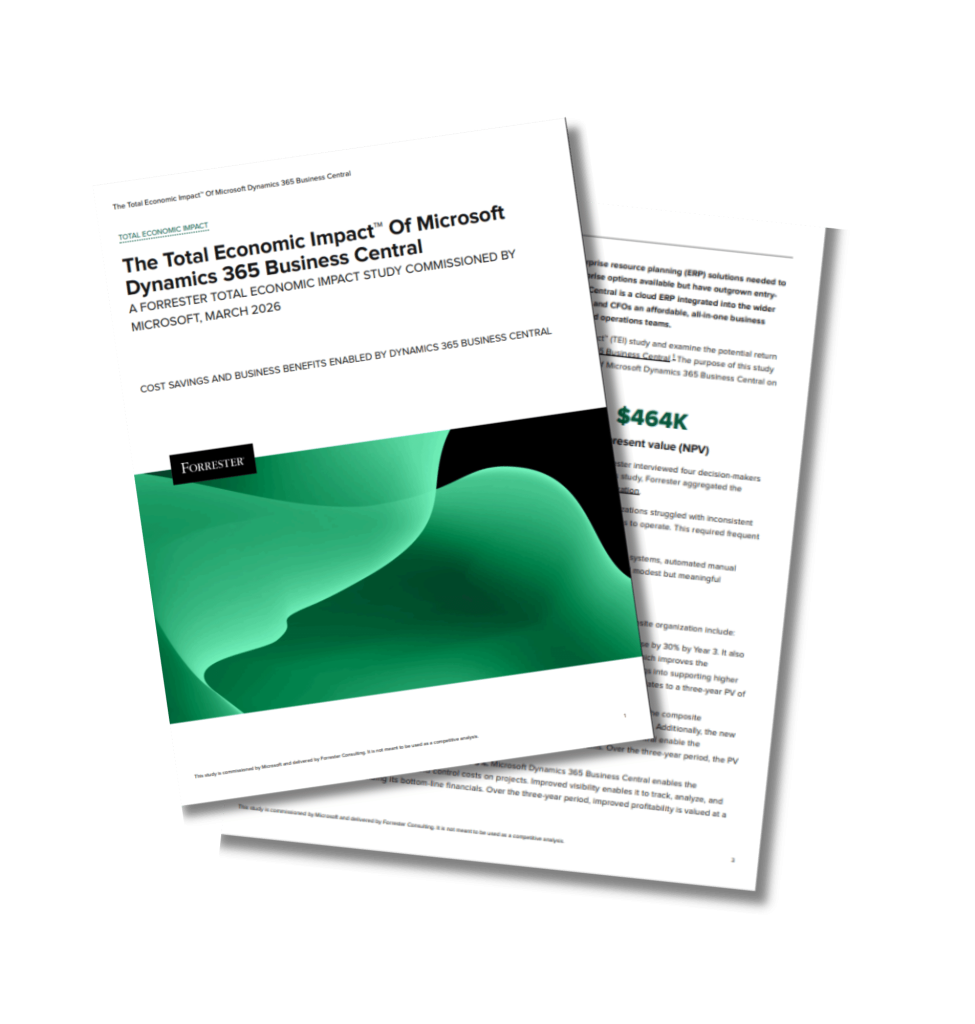
Forrester Study: Business Central Delivers 200% ROI in Three Years

See the numbers behind the business case for Business Central. More than 200% return on investment over three years, with payback in as little as six months.

Operation Directors in Business Central: FAQs

To help you navigate our page more effectively, we’ve complied answers to some of the most frequently asked questions. If you have any additional questions or need further clarification, please don’t hesitate to contact us! 

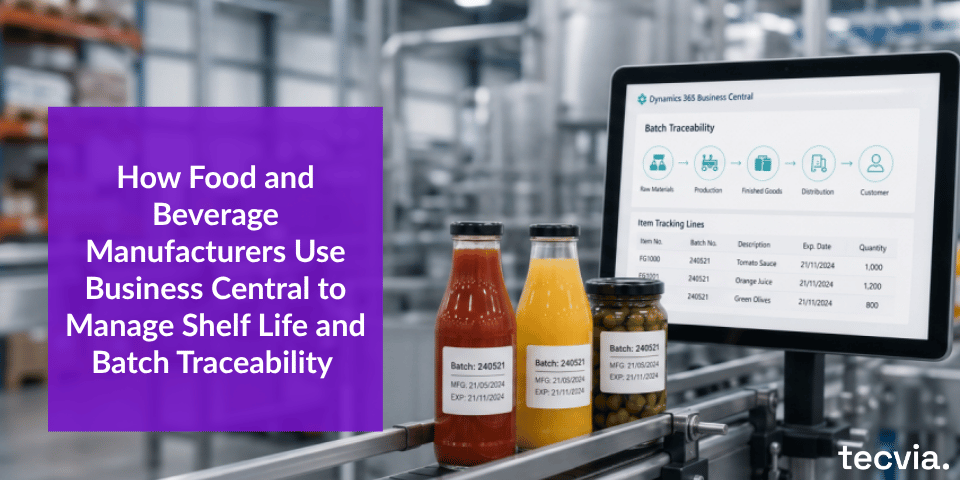
Business Central assigns serial numbers or batch numbers at the point of receipt and tracks them through production and sales. Forward and backward tracing, recall management, and expiry date tracking are all included. Full traceability meets regulatory requirements across manufacturing, food and beverage, and life sciences. 

Yes. Business Central supports unlimited locations with transfer orders between them, location-specific inventory, multi-location picking, and central visibility across all sites. Stock balancing and location optimisation tools help you distribute inventory efficiently across your operation. 

Business Central links sales orders directly to production orders so customer-specific requirements drive the build. Customer-specific bills of materials, direct material reservation, progress tracking, and direct shipment are all supported. Make-to-order workflows keep customer commitments visible throughout the production process. 

Machine centres and work centres define available capacity and routings define production requirements. Business Central compares capacity against load, identifies bottlenecks, and supports both finite and infinite scheduling. What-if analysis lets you model different scenarios before committing to a plan. 

Yes. Bill of materials functionality manages recipes with version control, ingredient substitution, yield calculations, allergen tracking, and nutritional information. Batch production and recipe scaling are both supported, so food manufacturing requirements are met within the standard system. 

Quality control is integrated throughout Business Central rather than sitting in a separate module. Inspection plans, quality orders, test recording, non-conformance tracking, corrective actions, supplier quality monitoring, and customer returns are all managed in one place. Quality reporting gives you the metrics to drive continuous improvement. 

Yes. APIs enable integration with manufacturing execution systems and data collection equipment. Production reporting, time tracking, and material consumption data flow from the shop floor into Business Central in real time, giving planning teams an accurate picture of what is actually happening. 

Business Central supports multiple reorder methods including fixed reorder quantity, maximum inventory, order point reorder, and safety stock calculations. Lead times and demand forecasting feed into the calculations so reorder points reflect actual consumption patterns rather than static estimates. 

Yes. BOM version control, engineering change orders, effectivity dates, revision tracking, and impact analysis are all included. Approval workflows ensure changes go through the right sign-off process and change documentation stays complete and auditable. 

Business Central provides traceability throughout the production process through batch tracking, serial numbers, certificates of conformance, and complete audit trails. Quality documentation, regulatory reporting, and industry-specific compliance requirements are supported across manufacturing, food and beverage, and life sciences. 

 For anything not covered here, get in touch directly. We’re happy to answer questions specific to your business and your ERP requirements.