Overview
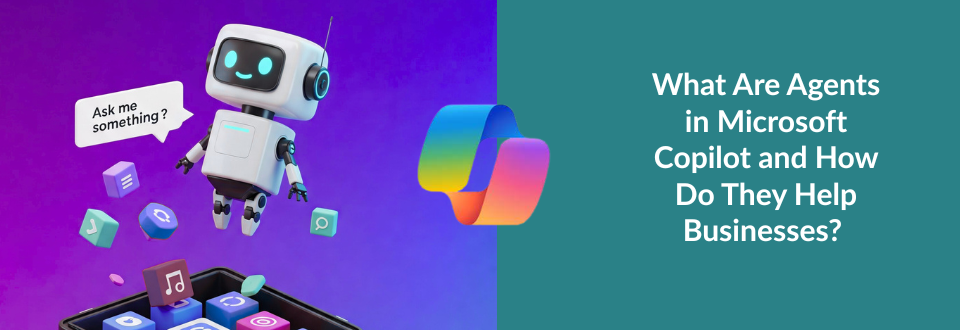
This post explains what Copilot agents are and how they help businesses automate tasks securely.
Artificial intelligence is becoming part of everyday work. Microsoft Copilot is one of the main tools helping businesses use AI in a simple and safe way, and one of the most important parts of Copilot is something Microsoft calls agents.
Agents are changing how people work with AI. They do more than answer questions, because they can help complete tasks, support decisions, and save time across the business, in the same way Business Central’s own AI features already do inside your ERP.
This post explains what agents are in Copilot, how Microsoft describes them, and how they help businesses work better.
What Is Microsoft Copilot
Microsoft Copilot is an AI assistant built into Microsoft tools such as Word, Excel, Outlook, Teams, and SharePoint. It uses large language models together with your company’s data to help with daily work.
Copilot can help you write emails, create documents, summarise meetings, and answer questions using your organisation’s information. Getting the most from it depends on writing clear prompts, because vague requests produce vague results.
Microsoft has made clear that Copilot is not just one assistant. It’s a platform, and this is where agents come in.
What Are Agents In Copilot
According to Microsoft, agents are specialised AI helpers that focus on specific tasks or areas of work.
Instead of being a general assistant that helps with anything, an agent is designed to do a particular job. It can understand requests, use business data, and take action within clear limits.
Copilot helps you, while agents work for you. They can answer questions, guide users, and complete tasks automatically, and they can be built to support roles such as HR, IT, sales, finance, or customer service.
How Agents Differ From Normal Copilot Use
When you use Copilot in Word or Teams, you usually give it a prompt, such as asking it to summarise a document or write an email to a customer.
An agent goes further than this. It has a clear purpose, uses set rules and instructions, and can follow steps and processes while connecting to business systems and data.
For example, instead of asking Copilot how to raise a support ticket, you could talk to an IT support agent that creates the ticket for you, checks the details, and updates you on progress. This mirrors how automation now works in tools like the Sales Order Agent inside Business Central.
Where Agents Live
Agents live inside the Microsoft Copilot experience. Users can chat with them in familiar tools such as Microsoft Teams or Copilot Chat.
Businesses can build and manage agents using Copilot Studio, Microsoft’s tool for creating AI experiences. Copilot Studio lets organisations create agents without deep coding skills, set what the agent can and cannot do, connect it to company data, and control security and permissions. This means businesses stay in control while still gaining the benefits of AI.
What Agents Can Do
Microsoft explains that agents can support many types of work, and a few examples show what that looks like in practice.
Agents can answer questions using business data, such as policies, procedures, and SharePoint documents, so employees get clear answers without searching through files. They can automate repetitive tasks too, including creating service requests, filling in forms, and routing queries to the right team.
Agents can also support employees in specific roles, such as a sales agent preparing customer summaries or a finance agent explaining spending data. Because agents are focused, they give more useful and accurate help than a general assistant, and they can guide users step by step through processes like onboarding or requesting approval.
How Agents Help Businesses
Microsoft positions agents as a way to improve how organisations work, not replace people. The benefits are practical.
Agents save time by handling routine tasks and answering common questions, so employees spend less time searching for information and more time on higher-value work. Because agents use approved data and set rules, they give consistent answers too, which matters most for HR policies, compliance rules, and IT processes.
Agents can bring together information from different places and present it clearly, helping managers make quicker decisions. They also lower pressure on support teams by handling repeated questions, and because Microsoft built agents to work within its existing security model, data access always follows existing permissions.
Who Can Build Agents
One of Microsoft’s main goals is to make agents easy to create. Using Copilot Studio, business users can design agents with simple tools, while IT teams add deeper connections and controls.
This approach means AI is not limited to technical experts, so teams closest to the work can shape the agents they need.
Why Agents Matter For Business Central Users
Agents are about practical help, not hype. They use your business data, follow your rules, and support real work, whether that’s answering an HR question or supporting a specific process inside Business Central.
For businesses running Business Central alongside Microsoft 365, agents mean less time on routine tasks and clearer information across the organisation. As Microsoft continues to develop Copilot, agents are likely to become a normal part of daily work, quietly supporting teams and helping organisations work smarter, in the same way our features guide covers the AI already built into your ERP.
Get Started With Copilot Agents
At Tecvia, we help you understand how Microsoft Copilot and agents can support your business, step by step. We work with you to identify the right use cases, set clear controls, and make sure AI works securely with your data as your business grows.
Get in touch for a free consultation, or ask us for a demo of Copilot agents in action. Our implementation and support teams help you set this up correctly from the start. Contact Tecvia to book a free consultation.